

<img height="1" width="1" style="display:none" src="https://www.facebook.com/tr?id=528363495297115&amp;ev=PageView&amp;noscript=1">
Go Back Up

Learn
3D Animation
In Blender


/ 3D ANIMATION ESSENTIALS · ONLINE COURSE

From the bouncing ball to lip sync, in 14 modules. Designed by Erik C. Schmidt (Disney, DreamWorks) and taught by Philip Piaget.

Is This You?

You’re curious about 3D Animation. You’ve seen amazing animations and wondered: “I want to do that. But where do I start?”

Maybe you:

  • Feel overwhelmed by all the tools and tutorials
  • Want a structured way to learn and get feedback, not just random YouTube videos.
  • Are looking to apply to animation schools or try your hand at freelance animation gigs.

Then this online animation course is made for you.

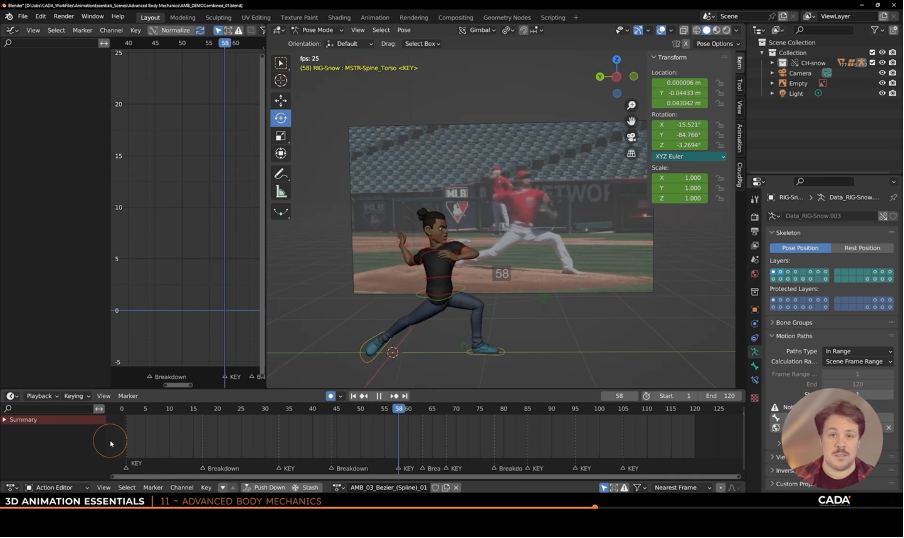
screenshot 3d animation course

What You’ll Learn & Achieve

By the end of this course, you'll:

  • Use Blender's animation tools with confidence, from keyframes to character rigs
  • Apply the 12 principles of animation to your own shots
  • Animate a walk, a run, a pantomime and a lip-sync shot
  • Finish with 11 assignments you can use as the start of an animation reel or school application

Who's Behind The Course

ErikSchmidt_Hvid_BG

Erik C. Schmidt

Animation Director, Industry Veteran

Erik brings over 30 years of experience from the world’s top studios, including Disney, DreamWorks, Universal Pictures, and ILM. He’s animated on some of the most iconic titles in the industry: Bolt, Black Panther, Prince of Egypt, Sharktale, and many more.

With decades of experience mentoring animators on high-stakes productions, Erik developed this course to give beginners a solid, studio-ready foundation built on the same principles used in feature film pipelines.

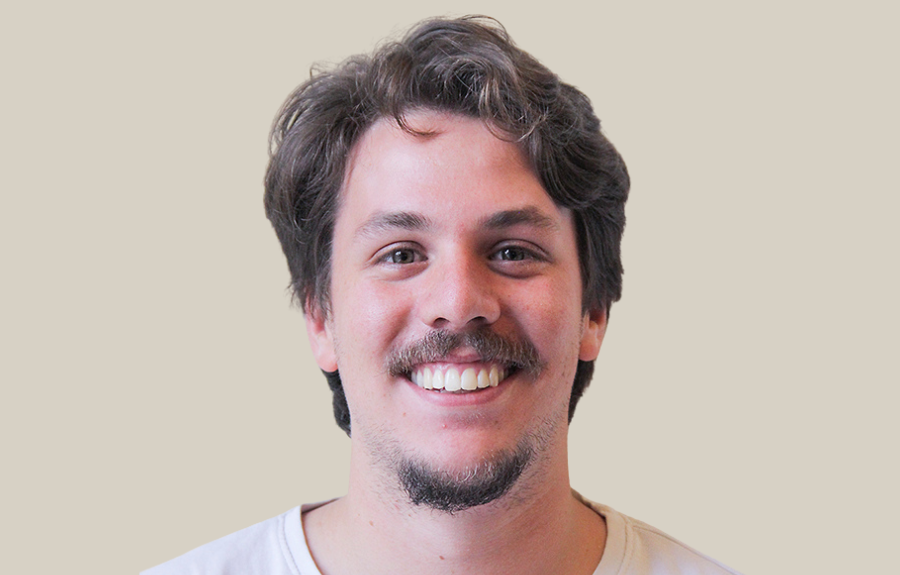
PhilipPiaget

Philip Piaget

Animator, Filmmaker, Instructor

Philip is your instructor throughout the course. A graduate of The Animation Workshop and Vancouver Film School, he’s directed the award-winning short film Reverie and worked across commercials, VR, and TV animation at studios like Atomic Cartoons, Global Mechanic, and Makropol.

With over 11 years in the field, Philip is passionate about helping new animators understand the why behind every movement, and helping them build the confidence to animate creatively and independently.

What’s Inside the Course

14 modules, about 10 hours of video and 11 assignments. At one assignment a week, that is about 11 weeks. You can go faster if you have more time.
  1. 01. Introduction

    Goal: Kickstart your learning journey with a clear overview of the course structure and what you'll achieve.

    Outcome: Understand how the course is structured and what skills and outputs to expect from each stage.

  2. 02. Animation Principles

    Goal: Grasp the foundational 12 principles of animation and develop the vocabulary to discuss and evaluate animated movement.

    Outcome: Ability to identify, describe, and apply core principles like Timing, Squash & Stretch, and Arcs in basic animation.

  3. 03. Blender Overview

    Goal: Get introduced to Blender’s interface, tools, and the animation pipeline.

    Outcome: Navigate Blender with confidence and understand its core tools and animation workflow.

  4. 04. The Bouncing Ball

    Goal: Apply fundamental animation principles through a basic bouncing ball exercise.

    Outcome: Create your first animated shot using Timing, Spacing, and Squash & Stretch.

    Includes an assignment

  5. 05. 3 Bouncing Balls

    Goal: Expand on the previous exercise with three distinct objects to explore physical properties and Arcs.

    Outcome: Animate three balls that demonstrate differing weight and motion styles.

    Includes an assignment

  6. 06. Forward Kinematics

    Goal: Learn to animate using Forward Kinematics with a basic character rig.

    Outcome: Animate a simple character demonstrating mechanical movement using FK.

    Includes an assignment

  7. 07. Inverse Kinematics

    Goal: Learn how Inverse Kinematics differs from FK, and apply it to the same rig.

    Outcome: Create a second animation showing control of the rig through IK principles.

    Includes an assignment

  8. 08. Basic Body Mechanics

    Goal: Transition to a human rig and apply animation principles to body motion and weight.

    Outcome: Produce an animation that communicates believable human motion and weight distribution.

    Includes an assignment

  9. 09. The Walk Cycle

    Goal: Learn the classic looped walk cycle using a humanoid rig.

    Outcome: Create a clean, repeating walk animation that demonstrates rhythm and balance.

    Includes an assignment

  10. 10. The Run Cycle

    Goal: Build on the walk cycle by adding intensity and speed through a run cycle.

    Outcome: Animate a dynamic run loop with clear poses and timing.

    Includes an assignment

  11. 11. Advanced Body Mechanics

    Goal: Animate with greater energy and complexity, using principles like Anticipation, Overlap, and Follow-through.

    Outcome: Create a physical, expressive animation that demonstrates dynamic movement and nuanced control.

    Includes an assignment

  12. 12. Hierarchies & Constraints

    Goal: Learn how to organise and control object relationships with parenting and constraints.

    Outcome: Apply structured rig setups in animation scenarios that require control linking.

    Includes an assignment

  13. 13. Pantomime & Performance

    Goal: Explore non-verbal acting in animation to convey emotion and personality.

    Outcome: Animate a character using body language and posing to communicate narrative or emotional beats.

    Includes an assignment

  14. 14. Dialogue & Lip Sync

    Goal: Synchronise animation with dialogue to enhance character performance.

    Outcome: Create a short lip-sync shot that combines voice, timing, and gesture for convincing performance.

    Includes an assignment

    When you finish, you receive a certificate of completion.

From our students


The course is easy to follow, even for beginners, and I’m learning a lot. I appreciate the step-by-step exercises that build on each other. My feedback sessions with Philip have been extremely helpful, offering in-depth advice and useful notes. Although I’m new to 3D animation and Blender, any challenges have been easy to overcome. Overall, I’m very satisfied and excited for the next lessons!


Ida Marie
Animation Student

Choose your plan

7-day money-back guarantee: if the course is not for you, tell us within 7 days and we refund you in full.

You can move to a higher tier at any time. You pay the difference between the two tiers plus 15%.

Group Mentorship

€799 one-time

What you get:

  • Full Course Access
  • CADA Community
  • Certificate of Completion
  • Live Group Feedback
  • 1:1 Portfolio Guidance

Personal Mentorship

€1,699 one-time

All Group Mentorship features, plus:

  • Individual Feedback on Your Modules

Intensive Mentorship

€2,449 one-time

All Personal Mentorship features, plus:

  • 8 Live 1:1 Calls With Your Mentor

Group Mentorship

Personal Mentorship

Intensive Mentorship

Features

Full course
Every video lesson, note and assignment brief, available for 12 months from the day you enrol, including any updates in that time.
Community (peer Q&A)
Access to CADA's community to share work, ask questions and learn alongside other students and working artists.
Certificate of completion
A certificate of completion awarded when you finish the course.
Live group feedback
A live online session once a week, in the late afternoon or early evening (Central European Time), where a mentor critiques submitted student work on screen and answers questions. Submit your own work and learn from watching others get critiqued. Included for your first 4 months, and every session is recorded so you never miss one.
Portfolio guidance 1:1 session
A one-on-one video call with a CADA mentor, about 45 minutes, taken within your first 4 months. It focuses on your portfolio and next steps: which pieces to build, how to present your work, and how to approach applications or first jobs.
Individual feedback on your modules
Each time you finish a module within your first 4 months, a CADA mentor reviews its assignment and sends back one recorded or annotated critique. Personal feedback on your own work, not only in the group sessions.
-
8 live 1:1 calls with your mentor
Eight one-on-one video calls of about 45 minutes with a CADA mentor, booked when it suits you within your first 4 months. Go through your work in real time, ask anything, and plan your next steps.
-
-

Counts towards the Certificate Programme

Enrol in the Certificate Programme in 3D for Games within 12 months, and the full course fee comes off your tuition (up to €2,000).

Frequently Asked Questions

Who is this course designed for?

The 3D Animation Essentials course is perfect for beginners in digital arts, as well as for those with some experience in CGI who want to deepen their skills in animation. It's ideal for anyone passionate about bringing characters and stories to life through animation.

Do I need any prior experience or knowledge?

No prior experience is required. The course begins with basic concepts, making it accessible to beginners, but also progresses to more advanced techniques that will benefit those with some background in digital arts.

What software and tools will I need?

You'll need access to a computer capable of running Blender, which is a free and open-source 3D creation suite.

What computer do I need? Can I use a Mac?

Any computer that can run Blender. Blender is free and runs on Windows, Mac and Linux.

How long is the course, and is it self-paced?

The course is self-paced and the time it takes depends on your skill level and the effort you put into your assignments. There are no strict deadlines. From module 4 onwards, every module ends with a hand-in assignment. You can get feedback on your assignments during your first 4 months: weekly live group feedback on every tier, plus individual feedback on each module you finish with Personal or Intensive Mentorship.

There are 11 assignments. At one a week, you finish in about 11 weeks.

If you complete 2 to 3 assignments a week, you can finish in 4 to 6 weeks.

Is it live or on demand?

The lessons are on demand, so you watch them when it suits you. With any mentorship tier, you also join a weekly live group feedback session online for your first 4 months, held in the late afternoon or early evening (Central European Time). Every session is recorded, so you can catch up if you miss one. Unsure if that fits where you live? Ask us before you enrol.

With Intensive Mentorship, your eight 1:1 calls are not tied to that time slot. You book them with your mentor at times that suit you both.

When can I start?

Any time. You get access to the course as soon as you enrol.

How long do I have access to the course?

You have access for 12 months from the day you enrol, on every tier. That covers every video lesson, note and assignment brief, including any updates to the course in that time.

Is the course taught in English?

Yes.

Is there any certification provided at the end of the course?

Yes. When you complete the course, you receive a certificate of completion.

Does this course count towards the Certificate Programme?

Yes. If you enrol in the Certificate Programme in 3D for Games within 12 months of buying this course, the full course fee comes off your tuition, up to €2,000 in total.

Fees from more than one eligible course can be combined up to that amount, and upgrade payments count too. It works with any payment plan, and the credit comes off the tuition, not the EUR 335 registration fee. The credit is applied when you enrol and cannot be paid out or refunded.

Can I upgrade to a higher tier later?

Yes. You can move from Group Mentorship to Personal or Intensive Mentorship, or from Personal to Intensive Mentorship, at any time. You pay the difference between the two tiers plus 15%.

Still Not Sure if You're Ready?

Start with our free 3D Bootcamp. Over three weeks of live sessions, twice a week, you build your first 3D scene in Blender.

No experience needed, and it's completely free.